
Roofing
Roofing Tear-Off Dumpster Sizing Guide
Why roofing shingles are sized by weight, not volume — a practical guide to choosing the right dumpster for a Cape Coral roofing tear-off project.
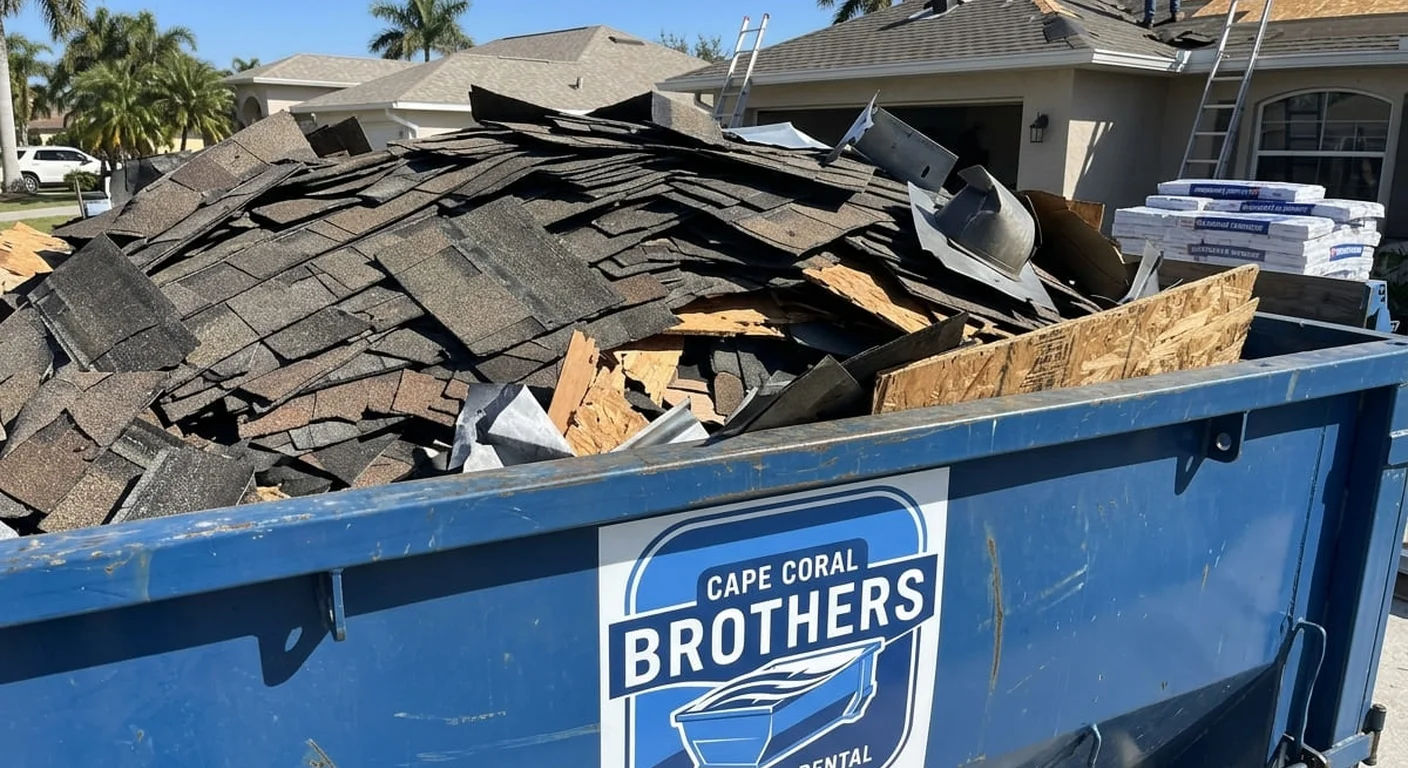
Roofing tear-offs are one of the projects where guessing on dumpster size goes wrong most often, and the reason is simple: shingles are heavy, not bulky. A pile of torn-off shingles can look modest sitting in a container and still push right up against a weight allowance well before the box looks full. Here’s how we size roofing jobs correctly the first time.
Why weight drives roofing sizing more than volume
Standard asphalt shingles weigh significantly more per square foot than most other construction debris — drywall, framing offcuts and packaging are all far lighter by comparison. That means the usual instinct of “how big does the pile look” doesn’t translate well to roofing debris. We size roofing tear-offs primarily around roof square footage and layer count, then double-check that against the container’s weight allowance rather than its visual capacity.
What actually determines size
- Roof square footage — the total area being torn off, usually estimated from the home’s footprint and roof pitch.
- Number of layers — a single-layer tear-off generates roughly half the debris weight of a double-layer tear-off on the same roof.
- Roofing material — standard asphalt shingles, architectural shingles, and tile all carry different weight-per-square-foot figures, with tile being considerably heavier.
- Underlayment and decking — if decking or underlayment is also being replaced, that adds volume and weight beyond the shingles alone.
General sizing guidance
| Roof size (approx.) | Layers | Typical container |
|---|---|---|
| Small home (under ~1,500 sq ft roof) | Single layer | 15 yard |
| Average single-family home | Single layer | 20 yard |
| Average single-family home | Double layer | 20–30 yard |
| Larger home or tile roof | Single or double layer | 30 yard |
This table is a starting point, not a fixed rule — every roof is different, and we’ll always confirm sizing with you based on the actual project before delivery. See our full dumpster sizing guide for how this fits into general sizing decisions, and our 20 yard and 30 yard dumpster pages for details on those specific containers.
What to tell us when booking a roofing tear-off
- Roughly how many square feet of roof is being torn off
- Whether it’s a single-layer or multi-layer tear-off
- What type of roofing material — asphalt shingle, architectural shingle, or tile
- Whether decking or underlayment is also coming out
This handful of details lets us recommend a size that accounts for weight correctly the first time, rather than a container that fills its weight allowance halfway through the job.
Storm-related roofing tear-offs
Hurricane and storm damage is a common reason for a roofing tear-off in Southwest Florida, and storm-damaged roofs sometimes come off in less predictable pieces than a planned tear-off, which can affect sizing. Our hurricane season debris cleanup guide covers storm-related debris generally, and the same weight-first sizing logic applies here too.
Placement for roofing jobs
Roofing debris is dense, so placement matters — a container needs to sit somewhere stable that can handle the load, and close enough to the work area that crews aren’t hauling shingles an unreasonable distance. Driveways are the most common placement for residential roofing tear-offs, and we protect the driveway surface on every delivery as standard practice, not an upsell.
Get the right size the first time
Roofing tear-offs are exactly the kind of project where a quick phone conversation about roof size, layers and material saves real money and hassle down the line. Call (239) 341-6424 and describe your roof, or explore our roll-off dumpster rental service for more detail. Our contact page has other ways to reach our team.
Need a container in Cape Coral or anywhere in Lee County? Call (239) 341-6424 and describe the job. We will name the size, the flat rate and a delivery slot — often the same day. No forms, no waiting on an email.